For years, Twiceme has quietly become part of the safety ecosystem on mountains and jobsites, embedding digital emergency technology into helmets and packs used by skiers, cyclists and industrial workers.
Now, the company is taking its next step into winter apparel. Through a new partnership with Haglöfs, Twiceme’s NFC-based digital safety technology has been integrated into select ski touring garments, marking the first time the platform has been embedded directly into winter clothing. For mountain operations and rescue professionals, the move represents a shift into safety information that travels with the person, not just their equipment.
“We’ve always seen Twiceme as a platform that could go wherever people need protection,” said Christian Connolly, CEO of Twiceme. “Over the past few years, we’ve heard from users and outdoor manufacturers asking why this technology couldn’t be in more of their gear. Winter apparel was a natural next step because the conditions are often more remote and more dangerous.”
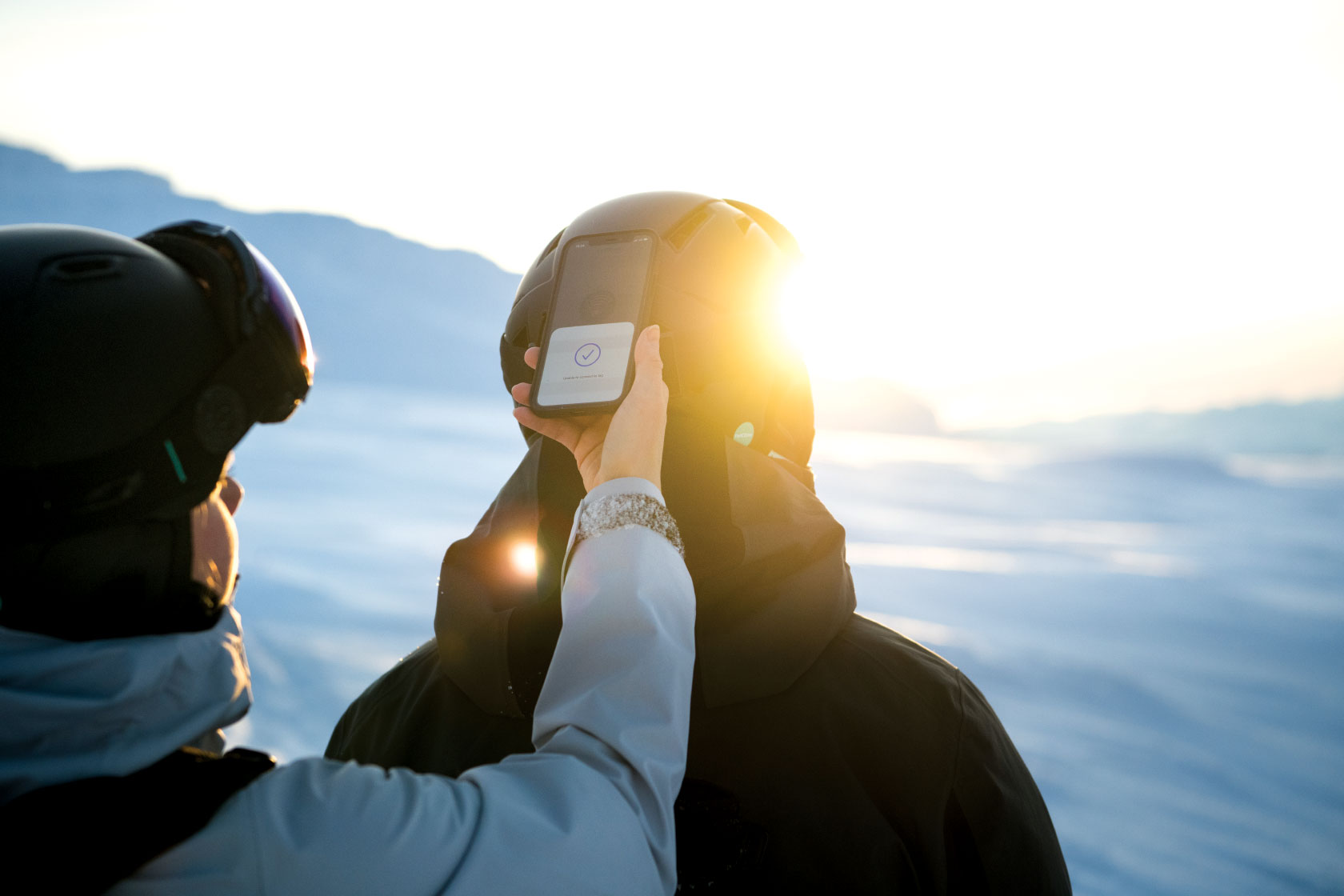
Twiceme’s system centers on the idea of giving first responders immediate access to critical information when seconds matter and communication may be impossible. By scanning the Twiceme symbol with a smartphone, responders can access a wearer’s Medical ID, such as allergies, medications and emergency contacts, without unlocking a phone or removing gear. In winter rescue scenarios, that access can fundamentally change how care is delivered. “If ski patrol reaches an incapacitated skier, they can scan the Twiceme symbol on the helmet or apparel and instantly see critical details like a penicillin allergy or that the person is diabetic,” Connolly said.
“That kind of information can fundamentally change the care given during an emergency, and before now, responders simply had to work without it unless someone in the group knew the person’s history. It also prevents the need to remove a helmet to access critical information the wearer may have taped inside, as you never know when a head or neck injury may be present.”
Embedding the technology into apparel adds another layer of redundancy. In cases where a skier is lying face-up and responders are trained not to move the head or neck, a jacket-mounted symbol can be scanned without repositioning the patient.
Twiceme also supports responders when they encounter an injured skier who can’t call for help by themselves. By scanning the Twiceme symbol on a helmet or piece of apparel, users can alert ski patrol through the app and immediately share precise GPS location data, streamlining the response process in areas with cell coverage. Even without signal, critical medical information remains accessible directly from the embedded chip, with location data automatically transmitting once coverage is restored. The system effectively bridges the gap between locating an injured person and getting the right help to them as quickly as possible.
Proactive safety, not just emergency response
While Medical ID remains the foundation, Twiceme has expanded into a suite of proactive safety tools designed to reduce reliance on chance encounters. Features such as Get Back Timer, Immobility Alert and Emergency Services allow users to set return times, detect potential incapacitation and automatically share location data with contacts or responders.
“These tools let people take ownership of their own safety rather than relying solely on someone finding them,” Connolly said.
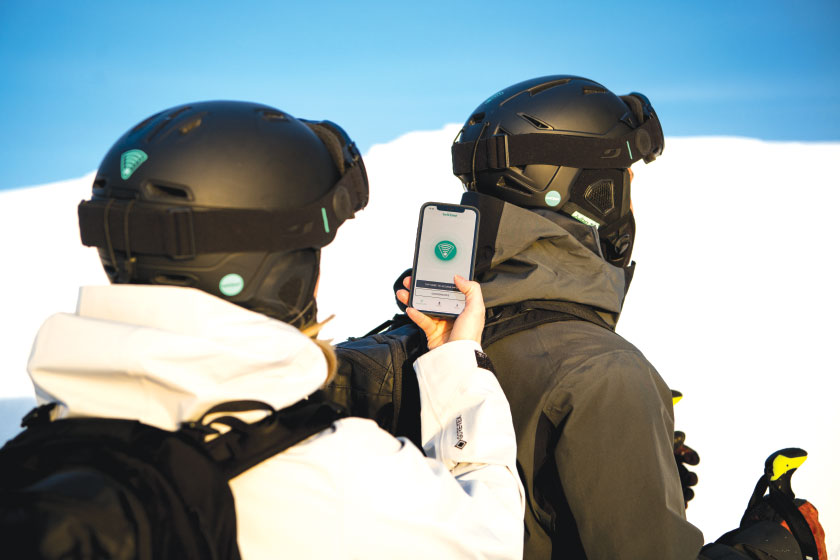
From an operations perspective, location sharing removes guesswork during response. A bystander who finds an injured skier can scan the gear, trigger an alert and transmit exact GPS coordinates instead of attempting to describe terrain or landmarks under stress. In the winter, cold drains batteries, dexterity disappears and technology often fails when it’s needed most. Twiceme’s reliance on NFC is intentional.
“Twiceme was founded by military personnel who experienced firsthand the consequences of not being able to access critical information or call for help in the field. Those real-world challenges, including harsh conditions such as extreme cold, shaped our approach from the start. We knew the technology had to work when conditions are at their worst, not just when everything is ideal,” Connolly said.
The embedded chip requires no battery, is always active and allows medical information to be accessed even without cell coverage. Alerts and location data queue automatically and transmit once signal is restored. “You scan, you get what you need and you act,” Connolly said.
Implications beyond the backcountry
Although ski touring and alpine adventurers are early adopters, Connolly sees broader relevance across resort operations. A medical emergency on a groomed run, involving someone with epilepsy or a severe allergy, presents the same information gap as a remote backcountry incident. In those moments, the first person on scene, whether patrol, lift staff or another guest, rarely knows the individual’s medical history.
“There are more people around in those situations, which is good, but whoever reaches them first still doesn’t know about that pre-existing condition unless the person can tell them,” Connolly said. “Having that information accessible with a quick scan changes everything about how bystanders and responders can help.”
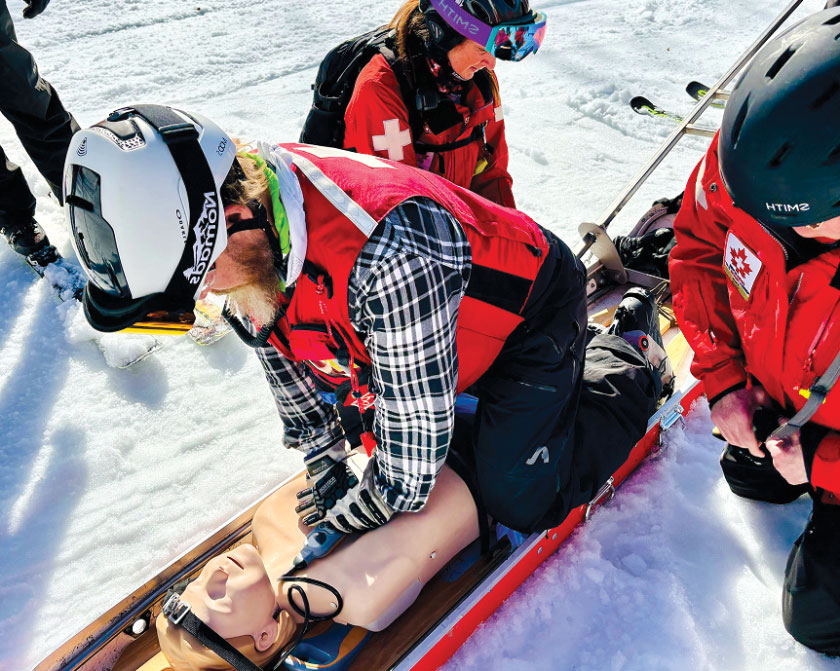
The technology also has implications for the rescuers themselves. Ski patrol, mountain rescue and snow operations staff operate in high-risk environments every day. Having medical information accessible on their own helmets or apparel adds another layer of protection for those responding to emergencies.
There are already over two million helmets with Twiceme technology in outdoor recreation and industrial settings, protecting skiers, cyclists and professional workers. The challenge now is awareness. Some users don’t realize the technology is built into their gear, and not all first responders know to look for the symbol.
“The infrastructure exists,” Connolly said. “As that awareness grows, so will the stories of lives impacted. The potential is already built into the gear – we want to inform more people to activate it.” Connolly also points to rental fleets as a future opportunity. Temporary Medical IDs on rental helmets or apparel could extend digital safety to first-time or casual skiers – often those least prepared for emergencies.
Toward a new standard
For Twiceme, the Haglöfs partnership is not a one-off but the beginning of a broader push into cold-weather gear. Just as digital safety has become an expected feature in helmets across multiple industries, Connolly believes apparel will follow. “Success for us means this becomes a standard, not a premium exception,” he said. “When first responders know to look for the symbol and people set up their Medical ID as routinely as they buckle their helmet, we know we’ve done our job.”
For the winter industry, embedded digital safety may soon be less about innovation and more about expectation – a quiet but powerful shift in how mountains prepare for the moments that matter most.