By the time the last chair swings into the terminal each afternoon, most guests are thinking about après-ski.
Ski area managers are already thinking about. In March and April, maintenance schedules are being tweaked, and retrofit ideas are being floated. And of course, the resort’s balance sheets are getting a long, hard look. Operators are voicing the same issues: aging lift systems, maintenance demands, safety expectations and energy costs.
At the heart of all these operational questions is the technology driving the lifts. This focus connects the current industry challenges to wider technical trends seen in sectors like cranes, hoists or heavy machinery, where a shift is underway from older direct current (DC) setups to modern low-voltage alternating current (AC) motors, often equipped with variable frequency drives (VFDs). The motivations behind that transformation closely mirror what ski area managers face today.
Maintenance, noise and reliability
Maintenance remains a central concern for ski area managers, especially in short seasons where every operating day counts. Here, AC technology brings incremental but important advantages. Without brushes or commutators, AC motors eliminate a whole class of consumable parts and associated inspections. Bearings and windings remain critical, of course, but those are well-understood elements with long-established monitoring and service practices.
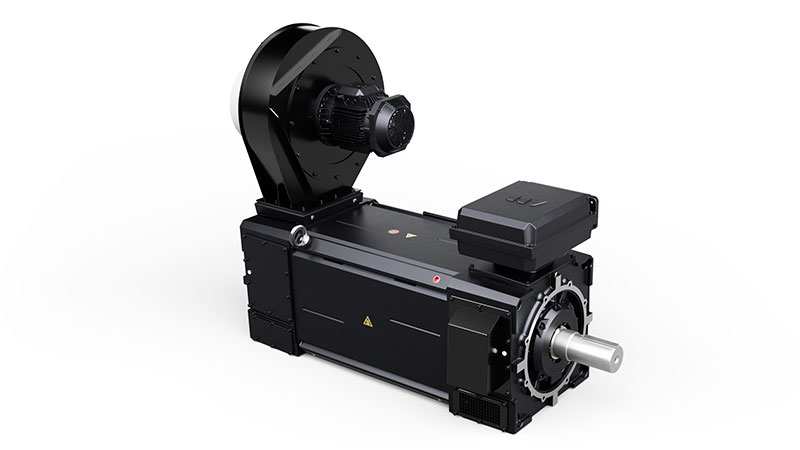
HDP motors are deliberately designed for straightforward installation, with attention to accessible connection points and compatibility with common accessories such as encoders, temperature monitoring devices and forced-cooling units. Noise and vibration are also reduced when mechanical commutation is replaced by electronically controlled AC operation. Quieter machines are not only more pleasant for guests and staff – lower vibration typically means less fatigue, supporting longer service intervals and lifetimes. HDP motors are also available with special, lower-noise blowers to further enhance the idyllic mountain experience for guests.
Because AC drives now dominate most heavy industries, there is also a broader ecosystem of technicians and service providers familiar with their commissioning and troubleshooting. For operators in remote mountain locations, that wider skills base can be a significant factor in supporting their machinery in the long term.
Regenerative braking and power quality
Lifts are inherently regenerative systems: descending loaded carriers can help power ascending ones. The key question is what happens to excess energy. Many existing installations manage this with braking resistors, which turn electrical energy into heat. On days with heavy traffic, those resistors can run extremely hot, shortening their life and placing additional demands on ventilation and cooling. The electrical energy itself is simply lost.
AC technology takes a different approach. Instead of dumping braking energy into resistors, regenerative drives feed power back into the grid whenever the lift operates in a generating mode. In container terminals and automated warehouses, where lifting and lowering cycles are constant, this has delivered meaningful energy savings, lowered temperatures and reduced failures.
There is also the issue of power quality. Regenerative drives are typically designed to maintain low current distortion (harmonics) and a power factor close to unity at the point of common coupling. That can reduce or eliminate the need for separate harmonic filters or large capacitor banks, and may allow more efficient use of existing transformers, cables and switchgear. For ski areas operating at the limits of available utility capacity, or in locations with weaker grids, these characteristics can be as important as the direct energy cost savings.
Bringing industrial lessons to ropeways
Ropeways remain a specialized domain, governed by their own standards and certification processes. Any modernization of motors and drives must be engineered and validated within that framework, in close cooperation with OEMs, consultants and regulators.
Nevertheless, the building blocks available today are proven in other safety-critical lifting applications. As this ski season winds down and operators review the condition of their older systems, it may be time to consider a transition. Applying the best of industrial motor and drive practices on the mountain could help ensure that, when next winter arrives, the lifts are ready to turn smoothly, safely and efficiently for many seasons to come.