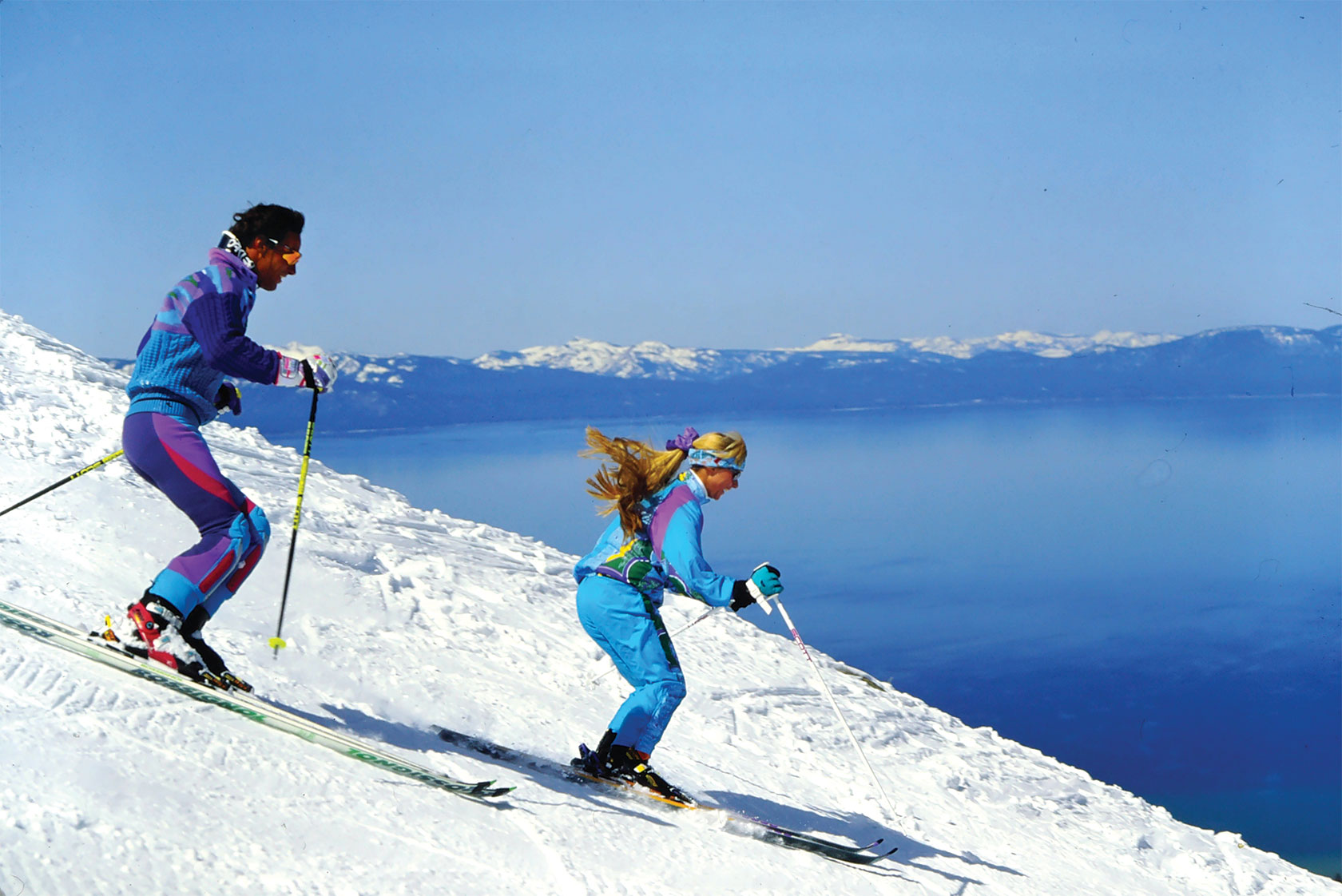
In 1947, Lee and Daisy Miller installed a lone rope tow to transport skiers 1,000 feet up the side of Monument Peak on the California-Nevada border. In 1955, a group of local investors opened the Heavenly Valley ski hill beside Lake Tahoe, and the operation has grown substantially since then.
“We started with a single chairlift and two rope tows in South Lake Tahoe when we first opened in 1955,” said Peter Disch, vice president of mountain operations for Heavenly Mountain Resort. “We’ve expanded significantly since then with 27 lifts, including two gondolas, one aerial tramway, two high-speed six-packs and seven high-speed quads, 111 trails and 4,800 skiable acres across four base stations in two states. We’ve also become a year-round destination, with a reputation for blending skiing with high-energy guest experiences.”
Heavenly Mountain Resort marked its 70th anniversary with a long lineup of events, concerts and on-mountain activities during the 2025-2026 ski season. A long-time favorite of celebrities like Clint Eastwood and John Denver, Heavenly Mountain has become a major recreational destination, and its decades of success offer useful ideas for snow operators worldwide.
Managing across two states and four base areas
As a bi-state resort with four base areas, two in California and two in Nevada, Heavenly Mountain deals with a range of unique regulatory and community challenges. “We manage them by starting with a really strong team of employees who know the rules,” Disch said. “We also engage with community stakeholders to make sure that we are good partners with them.”
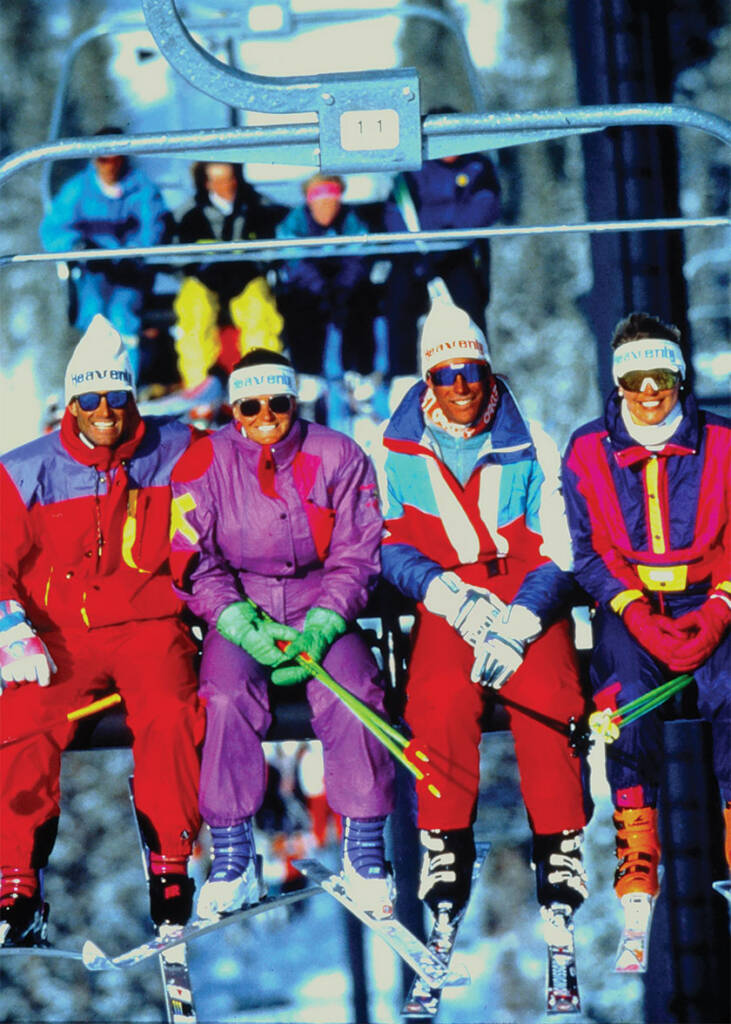
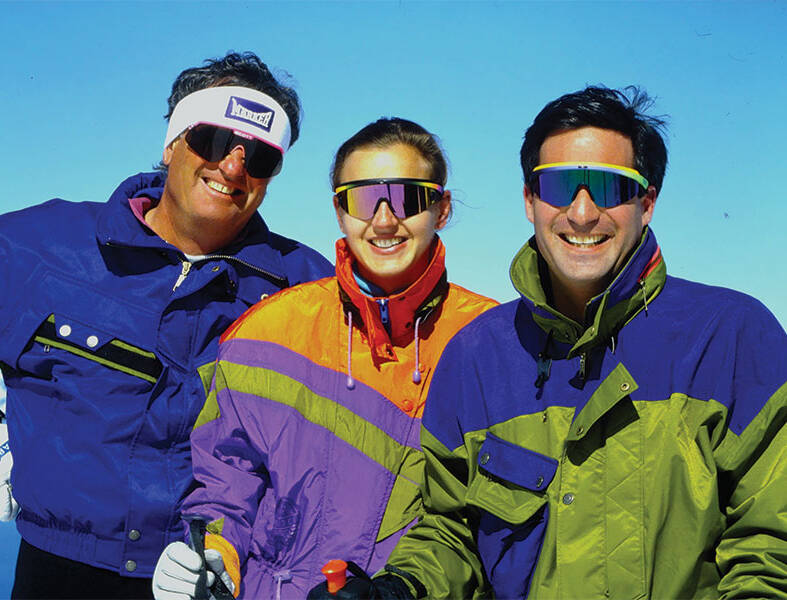
Being a bi-state, multiple-base operation has its advantages. “Each base offers a totally different variety of terrain,” he said. “Our California side has some of our most advanced terrain, while our Boulder, Nev., base has some of the best beginner runs.”
Evolution of lift systems and uphill capacity
Heavenly Mountain has continually modernized its lift systems and uphill capacity to improve guest transportation, growing from double chairs in the 1950s to modern high-speed quads, six-packs, gondolas and an aerial tramway. “Previously, the ride time out of the Boulder base to the top of North Bowl was almost 30 minutes across two different chairs, which led to low utilization of that terrain,” Disch said. “By upgrading North Bowl to a high-speed quad, ride time is now under six minutes. We’re seeing more guests going there as a result.”
Managing old and new infrastructure
Seventy years of operations means that there is a mix of new and old technology being used at Heavenly Mountain. The resort keeps this mix harmonious through extensive and proactive maintenance. “We’ve got a really talented team maintaining this equipment who are also ready for those unexpected things that do occur,” said Disch. “They get us back up and running as quickly and safely as possible.”
Choosing capital investments to enhance guest experiences
Heavenly Mountain chooses its capital investments “through the lens of the guest experience,” Disch says. “What’s going to have the greatest and most positive impact on our guests?” he said.
In doing so, Heavenly Mountain has expanded its criteria beyond skiing and snowboarding to include the entire guest experience while dining and enjoying entertainment off the slopes. This includes the Rockstar Energy Drink DJ Cat, which is a branded, mobile DJ booth that turns parts of the resort into an outdoor dance floor. “We approach entertainment and fine dining as being fully complementary to the skiing and snowboarding experience,” Disch said. Heavenly Mountain also considers the year-round impact of its capital investments, in a bid to serve guests during the summer and other off-season months.
Operational metrics that matter most
Heavenly Mountain tracks its guests’ attitudes using more than 30 specific metrics via post-visit surveys and uses AI to summarize and assess this feedback. The resort also puts its leaders on the slopes to hear from guests in person and holds community open houses to stay in touch with the community. “We want to know: What’s working well? Where can we improve? And what have guests seen elsewhere that maybe we should try out?” said Disch.
Expanding into summer and non-winter operations
Heavenly Mountain has expanded into summer and non-winter operations by deploying mountain coasters and zip lines. This move to a year-round schedule has been good for cash flow, business health and employee retention. “It’s been great to be able to expand into the off-season and provide stability for the business and our employees,” said Disch.
We’ve got automation that allows us to turn on a bunch of snow guns from a cell phone anywhere on the mountain. The benefits to our resort and our guests are significant.
Peter Disch, Heavenly Mountain Resort
Moving to a year-round operation means that off-season maintenance has to be balanced with continuing site use. “There’s definitely a lot of planning that goes into it,” Disch said. “Our maintenance teams and I spend a lot of time planning which off-season projects we are tackling this year.
The role of technology in mountain operations
Technology has been a driving force of Heavenly’s success. It started with lifts, but has moved into other areas of the operation, such as snowmaking.
“There was a time when a person would need to go out to every single snow gun and open the air and water valves to get the system going,” said Disch. “Now we’ve got automation that allows us to turn on a bunch of snow guns from a cell phone anywhere on the mountain. The benefits to our resort and our guests are significant.
Operational challenges lacking technical solutions
Even with all the advances offered by technology, there are still some operational challenges that defy such solutions. “Ultimately, we still operate in high alpine environments that have extreme weather,” Disch said. “So when we look at aerial ski lifts in the context of high winds, lightning and intense snowfalls, these are challenges without a real technical solution outside of building a tunnel around the lift, which is obviously not practical or feasible.”
What Heavenly Mountain would do differently if starting today
If he had access to a time machine, Disch says he would go back and do some things differently at Heavenly Mountain. “One would be to commit to summer operations earlier, due to the level of success we’ve seen with them to date. The other would be to embrace snowmaking automation earlier. When we have those short, cold windows, it makes it so much more productive to turn on our snow guns so much faster,” he said.
“Moving to parking reservations has totally changed that arrival experience. It’s taken a lot of the stress and anxiety out of it, and vastly reduced traffic jams at opening time because people know they have a parking spot before they ever get to the resort.”