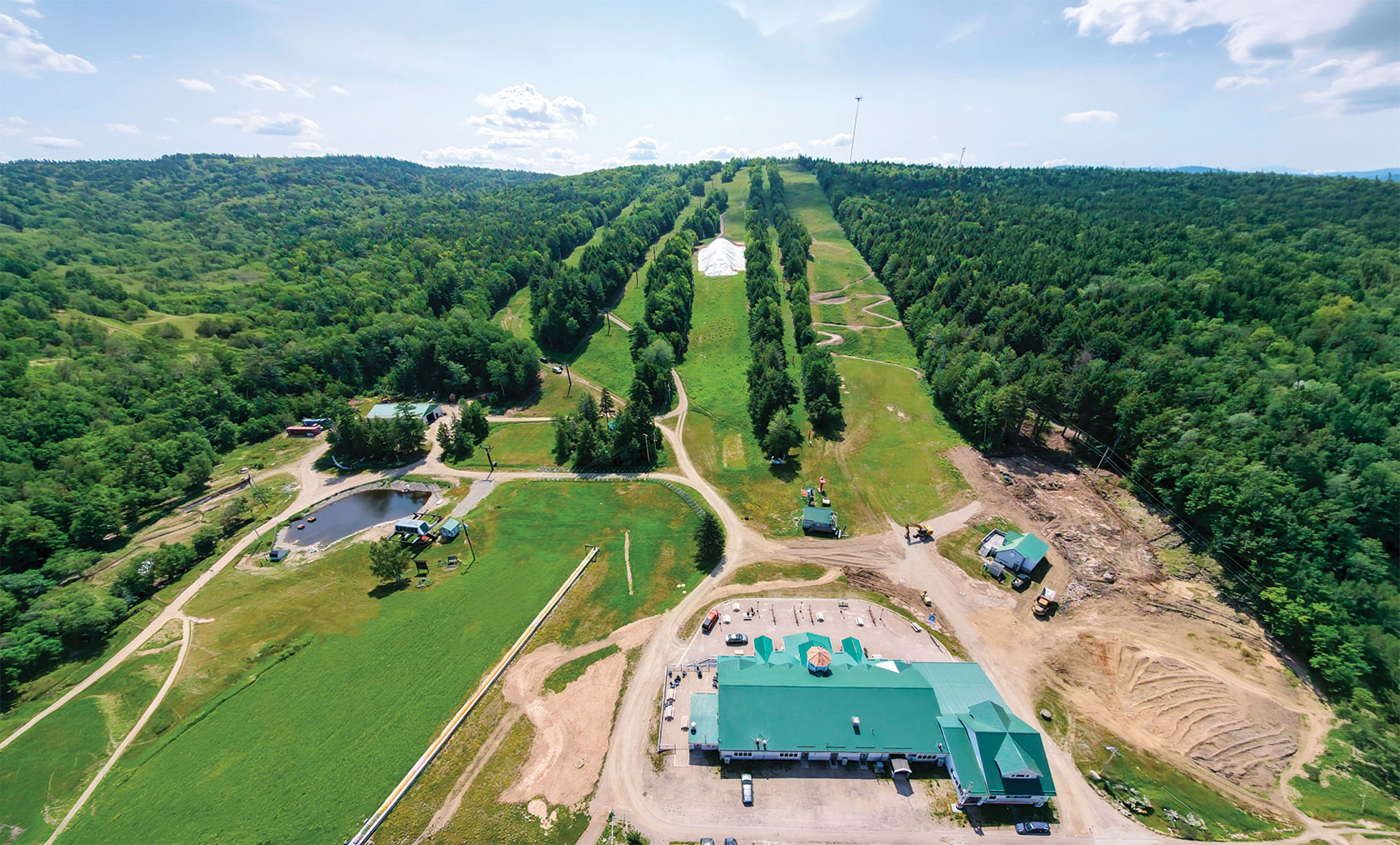
Call it a case of waste not, want not. A ski hill in Atlantic Canada is hoping to get a jump on the season by preserving a massive pile of snow from last season and reusing it for the upcoming 2026-2027 season.
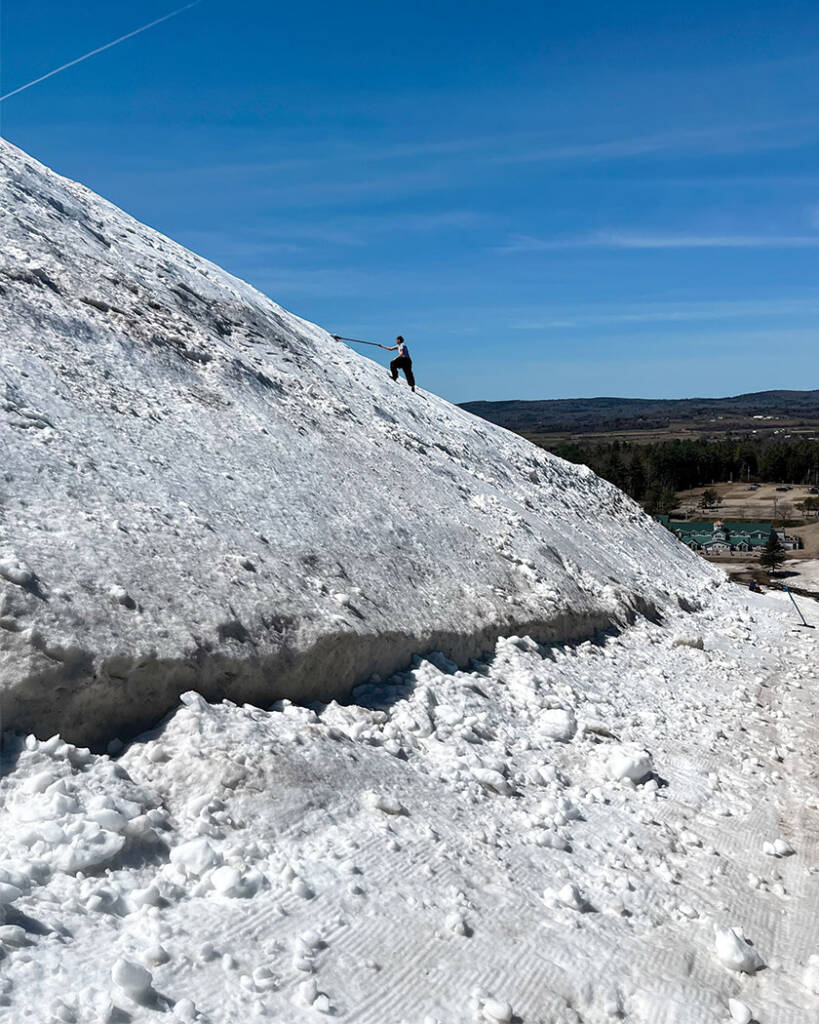
Crews at Ski Martock, located near Windsor Forks, N.S., pushed together as much snow as they could at the end of last season. The giant heap measured about 125 meters long, 35 meters wide and nearly 11 meters high, and contained an estimated 18,000 cubic meters of snow.
Once all that snow was gathered, workers then covered it with a white breathable cover made entirely from polypropylene, a fully recyclable synthetic polymer that boasts high thermal insulation properties. The high-tech blanket allows the snow pile to cool itself and reduce the melting of the snow from the pile. It was supplied by Snow Support, a company based in Czechia.
Preserving snow under thermal covers is sometimes referred to as snow farming and has been practiced in Europe for decades. That includes Levi, a ski resort in Finland. The resort has hosted multiple World Cup events over the years, but its ability to continue to do so was threatened by an ongoing lack of early season snow. It’s been a non-issue since they started using snow storage several winters ago.
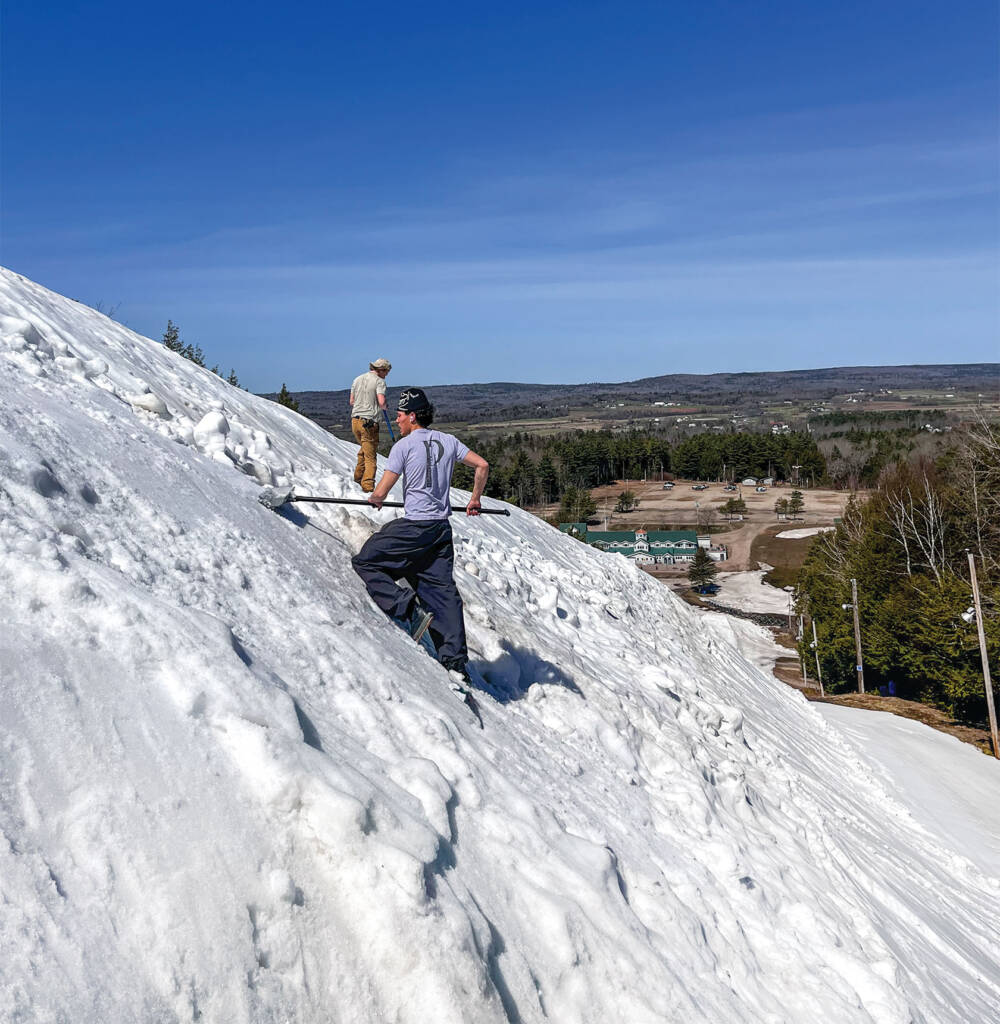
Ski Martock owner Martin Kejval hopes that’s the case at his ski area. However, this is the first time a snow preservation project on this scale has been attempted on Canada’s East Coast. Kejval says he first learned about the technology about five years ago and was eager to try it after seeing it in use last summer at Sun Peaks ski resort, located near Kamloops, B.C.
Following a March 6 “Tim Bits” breakfast meeting with staff, he and operations manager Andy MacLean got in touch with Snow Support owner and CEO Michal Ritter about installing one of the company’s Cover ICE covers at Ski Martock. Ritter quickly agreed and Kejval says he was happy for his ski area to serve as a “guinea pig” for the project.
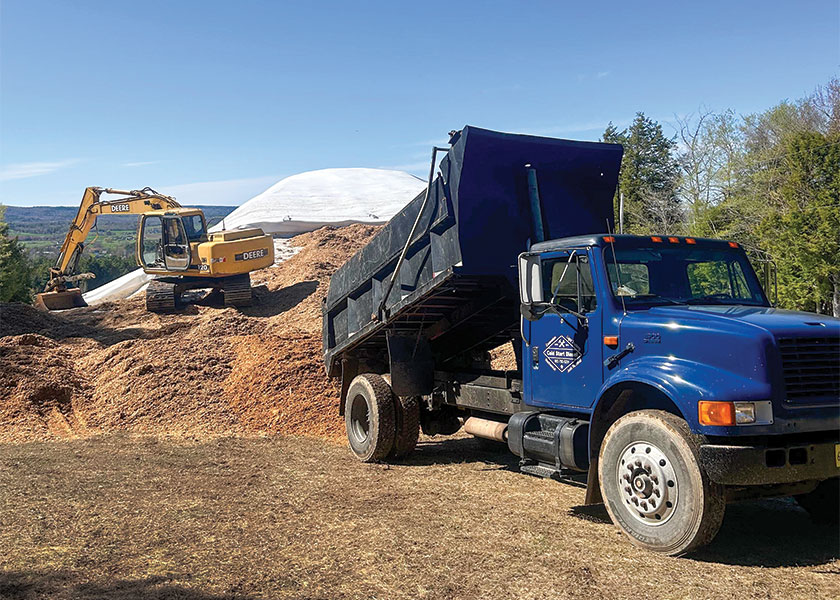
A few weeks later, the ski hill ran its groomers for five straight days to gather up any remaining snow it had, shape it and then cover it with the textile covering. Some of the snow, including any that might be protruding from the white blanket, was covered with 30 centimeters of wood chips that will act as an additional layer of insulation. Kejval and MacLean hope that between 40 and 50 percent of the leftover snow will remain by the time they uncover it and begin preparing the ski area for next season.
The high-tech blanket allows the snow pile to cool itself and reduce the melting of the snow from the pile. It was supplied by Snow Support, a company based in Czechia.
The primary reason Kejval says he was open to trying something different was the unpredictable weather the East Coast has been struggling with for the past decade which has reduced the length of the ski season. Last season was the first time in a decade that Ski Martock was open for more than 100 days of skiing.
“We always have snow at the end of the season. So we thought, ‘What can we do with that snow instead of watching it painfully melt so we can open earlier next year and make those ambitions of our clients materialize?’” he said.
As a result of that unpredictable weather, Ski Martock has struggled to begin its season by its usual mid-December start for the last several years. The hope is that by preserving snow from last season it will ensure they can start welcoming guests before the Christmas holidays this winter.
“This could be a game changer for us if this snow storage works as we anticipate it will work. We would like to add two more snow storages next year. The whole thing is about getting open early or on time. If we can guarantee December 10 or somewhere around there every year, then you’ve got winner, winner, chicken dinner,” Kejval said.
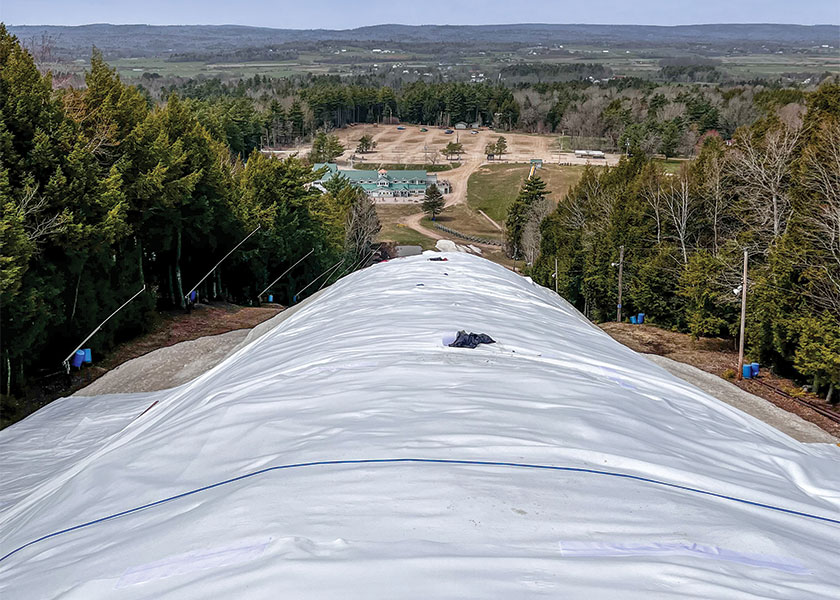
He was told by the cover’s distributor that very little melt is likely to occur until early August. That melting should dissipate by the end of September when overnight temperatures start getting close to freezing again and the pile will stabilize. MacLean jokingly says the covering uses “magic” to preserve snow, but it’s actually science. The breathable polypropylene material is resistant to even the strongest UV rays and effectively reduces the amount of heat absorbed by the surface underneath thanks to its porous structure.
“One of the most important things is that it’s white, so it’s reflecting the light that hits it. You can feel that light being reflected when you go near it,” he said.
MacLean and his crew closely monitored the snow pile on a weekly basis throughout the summer to ensure no snow was exposed to the elements and the insulated cover was working as anticipated. They also measured any water draining from the pile to help determine how much melt was occurring. So far, so good the duo noted in early June.
“So far it looks like it’s working fantastically. I think we have almost no visible shrinkage,” Kejval said. “But as Michal said to us, it will look great, great, great until you hit August. He said it will all depend on how quickly you start hitting cold temperatures in September. One night in September where it’s zero [degrees Celsius] or minus one [degree Celsius], it could make a massive difference.”
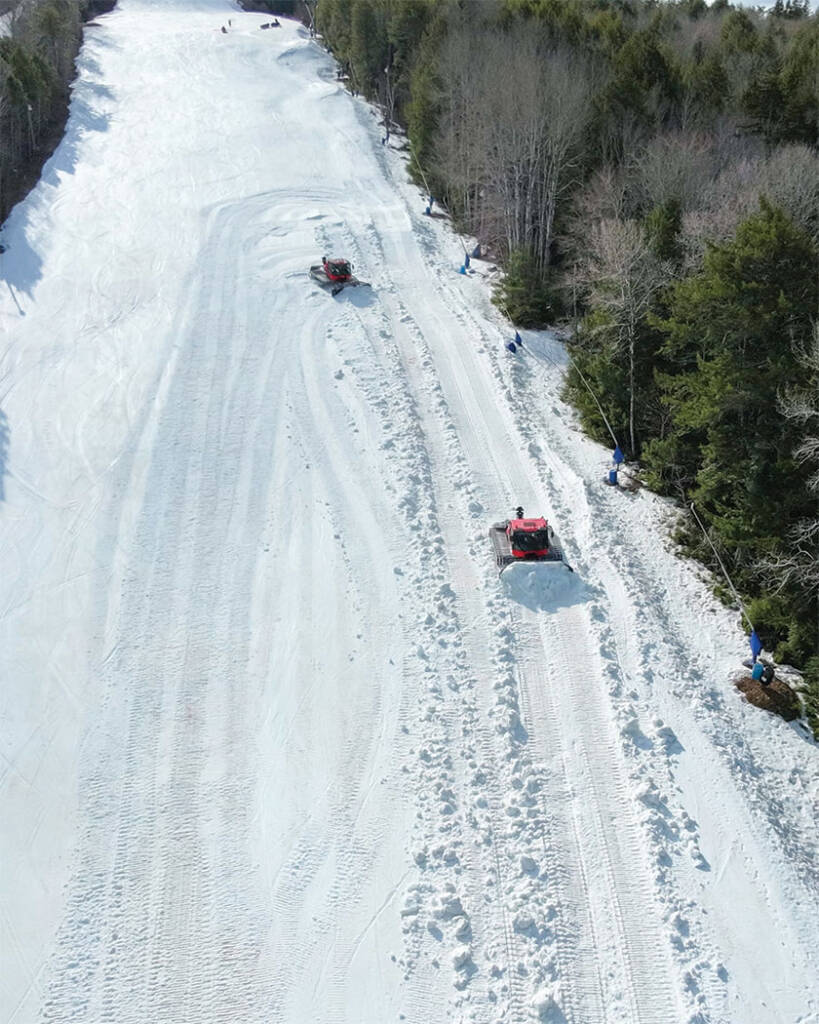
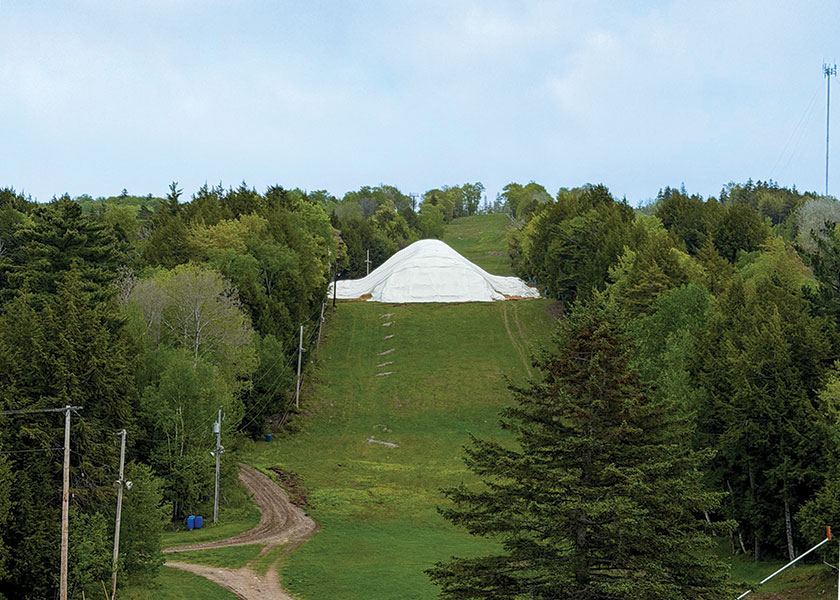
Kejval and MacLean say they are grateful for the assistance Ritter and his company provided during the installation of the covering. He was on-site twice during the installation to answer questions and provide guidance to the ski area’s staff.
“We knew enough that we knew we didn’t know anything, so we hired a professional who actually sells these tarps and who actually planned the whole nine yards for us. This was not his first rodeo,” Kejval said. “It’s a big learning curve for us. I’m sure that we will make a lot of mistakes the first time which hopefully we will improve on with time. Only time will tell how the cookie crumbles.”
Kejval says the beauty of snow storage is that it can save a ski operation time and money because it doesn’t have to operate costly snowmaking equipment as frequently during the winter. He is optimistic snow storage could become far more commonplace if the trial at Ski Martock is successful.
“Other people have done it and they have done it successfully. We are just doing it on a larger scale,” Kejval said. “I think this is the future for ski hills because … winter is moving to the right a little bit. We now have better conditions in April and not so great conditions in December. This is a fantastic solution to fix the problem. We’re not afraid to try different things at our (operation). I think that’s the only reason not too many places in North America are trying this yet because they’re hesitant of change.”