As with its previous iterations, this year’s Cross Country Ski Areas Association (CCSAA) Annual Conference offered attendees a wealth of learning opportunities tailored to the needs of those working in the Nordic ski industry.
While those learning opportunities are important, the CCSAA’s executive director says it’s the connections and relationships the convention helps foster that are the most lasting impact of the annual event. “So much work gets done when you’re in a session, but so much more gets done just talking over a beer or a coffee or on the trails or walking on a snowmaking tour,” said Reese Brown.
“Any of those things is an opportunity for our members to meet new members or reconnect with members they haven’t seen in a year or two … so that when they’re back in their ski area next January they’re like, ‘Hey, I was talking to so and so from Sun Valley (at the conference) and now I’ve got the issue we were talking about. I know who he is. I’m just going to call him up.’ That’s a really big part of our conference.”
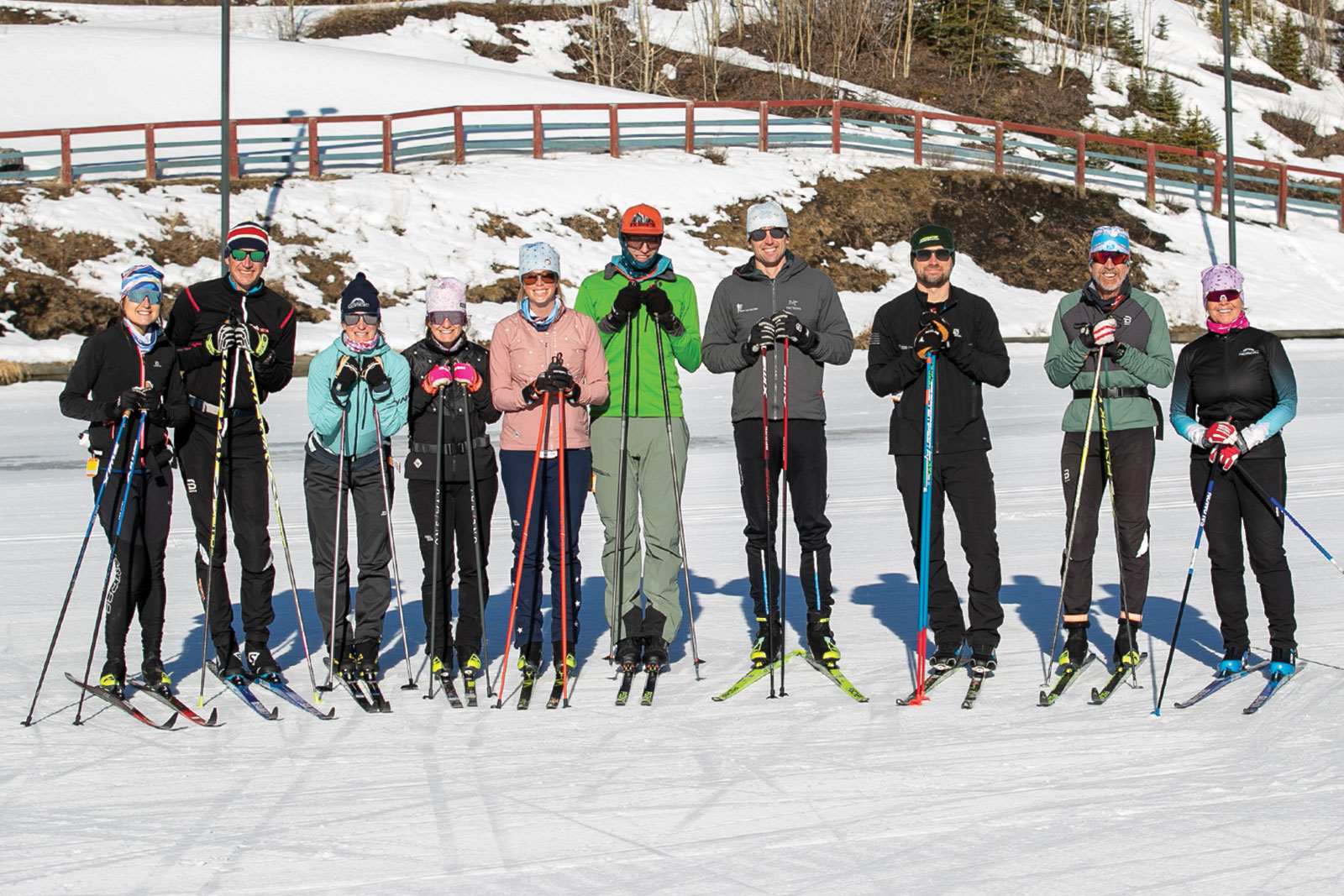
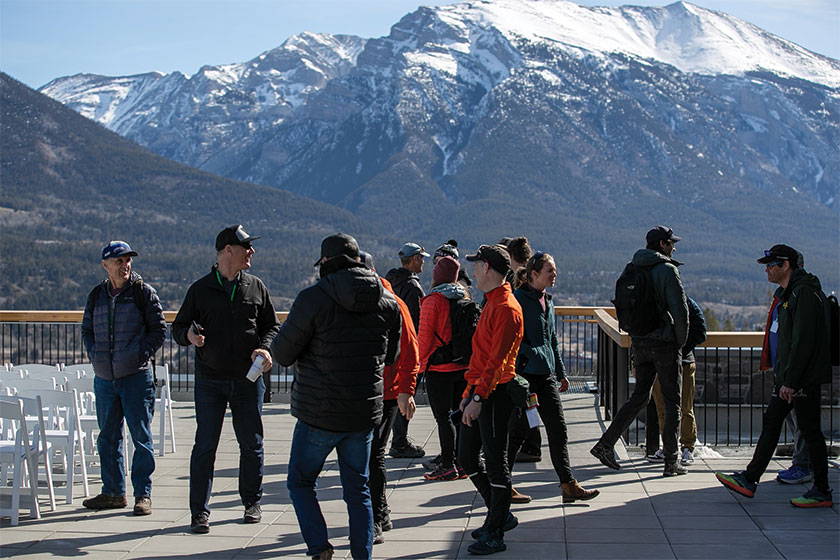
This year’s CCSAA Annual Conference was held April 8–10 at the Canmore Nordic Centre in Alberta, Canada, a world-class facility that has hosted Olympic and World Cup cross country and biathlon events. It was the first time a Canadian venue hosted the event in nearly a decade. More than 75 Nordic ski area managers, groomers and suppliers took in this year’s conference, which covered a host of subjects including snowmaking, snow farming, grooming, risk management and landowner relations.
Brown says Canmore was chosen as this year’s host site for a number of reasons. First, it was Canada’s turn to host the event, which draws CCSAA members from across Canada and the U.S. It’s also a picturesque venue and its staff are experts on the subject of snow storage, an increasingly important subject for many ski areas in these times of climate change.
“It’s beautiful up there,” Brown said.
The three-day event kicked off with a snowmaking workshop during which participants took part in a walking tour of the Canmore Nordic Centre and got a first-hand look at the facility’s snowmaking system including its pump house, snow gun placement and supporting infrastructure. They also learned about Canmore’s vegetation management strategies and canopy considerations.
“We try and get outside for the snowmaking workshops,” Brown said. “We love to walk the trails of the ski area wherever we are and look at what they’ve done. It’s very much a look and-see opportunity to learn.”
That workshop was followed by another devoted to grooming. The hands-on session was an opportunity to share real-world grooming knowledge. Following a shop tour, participants were broken into four small groups that were paired with a lead, an operator and a grooming machine, and guided through a demonstration of various grooming situations. They addressed a number of topics including pushing, blading, tilling and tiller floating. Participants also got to tour Canmore’s facilities and learn how staff address many of the day-today challenges.
“We always spend time looking at the (host) facility, which is a big part of what we did there,” Brown said. “We looked at World Cup grooming since they’re a World Cup venue. We also looked at their rentals shops, how they operated, how they utilize the buildings they have. A big part of it is looking at the host site because it’s always interesting for our skiers to see how other people do the same thing.”
A second grooming session was held on Day 2. The instructional session offered a right seat/left seat experience and discussion in which experienced groomers took turns operating a snowcat and shared knowledge with each other.
The remainder of the conference was filled with a number of panel discussions and breakout groups on a range of topics including community connections, maximizing the use of the Nordic Pulse trail grooming platform, risk management and how to determine if tracking snow depth is right for you. One of the subjects that was on the minds of many in attendance at the conference was snow storage.
The CCSAA couldn’t have picked a more fitting location for this year’s conference in that regard since Canmore is the host site for Frozen Thunder, an early season cross country and biathlon competition that uses stored snow from the previous season.
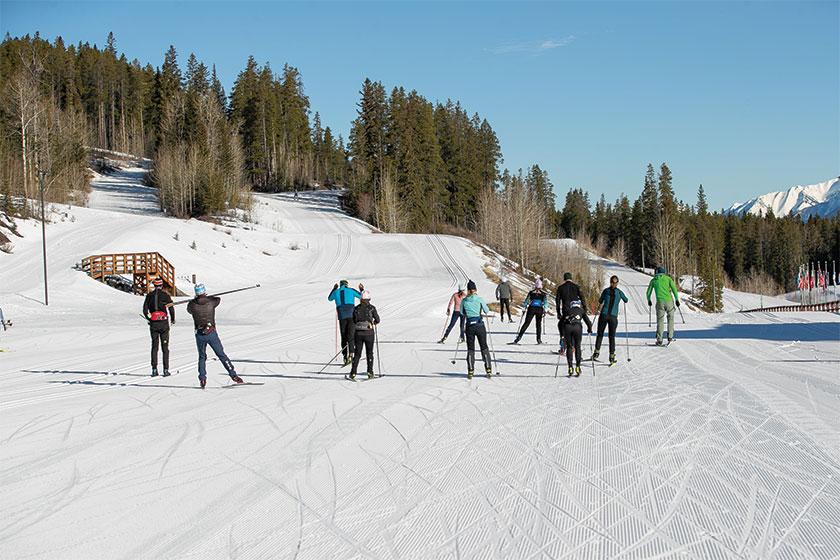
“For so many years we’ve relied on our ability to make snow. Now we’re finding that we can’t necessarily rely on that because if the temperatures are hovering around the freezing mark or above, snow cannot be made and as a result people are turning to other things,” Brown said. “If you’ve got a snow storage system, you’re that much more ahead of the game. That’s why we feel it’s so important. But it’s expensive. It does not work for every ski area at this point. If you barely have enough snow to make it through the winter, you probably don’t have enough snow to make that work for you.”
Climate change and the increasing need for snow storage was one of the main reasons Shawn Leamon chose to attend this year’s CCSAA conference. Leamon is the general manager of Blow Me Down Trails, a not-for-profit, community-based cross country ski club located just outside of Corner Brook, N.L.
“We’re just coming off the heels of two extremely low snow accumulations for our region and that drastically affects business. It’s kind of hard to have a ski resort if you don’t have snow,” he said. “Typically we had 16 feet of snow… from January to January. There was plenty of snow to work with. We didn’t really worry too much about shaping our turns and our trails and that kind of stuff. But now with low snow years, we can’t do that anymore. Even the quality of our trails is not what the normal standard is because we have less material to work with."
Mike Hussey is the general manager of Oak Hill Outdoor Center, a not for-profit cross country ski facility in Hanover, N.H. He’s also on the CCSAA board of directors and has attended more of its annual conferences than he can remember. He says what he enjoys most about the conference is making connections with other members of the cross country ski community and the spirit of cooperation that is an integral part of the event.
“I never come back from a conference without a whole bunch of new ideas and different ways of doing things,” he said. “We’re all cross-country ski centers. We’re all trying to basically do the same things, but there’s so many different ways to do it. Even with areas right nearby, there’s never really a sense of competition. I think we’re all trying to make skiing better and get more people involved. That’s the biggest thing we get out of it.”