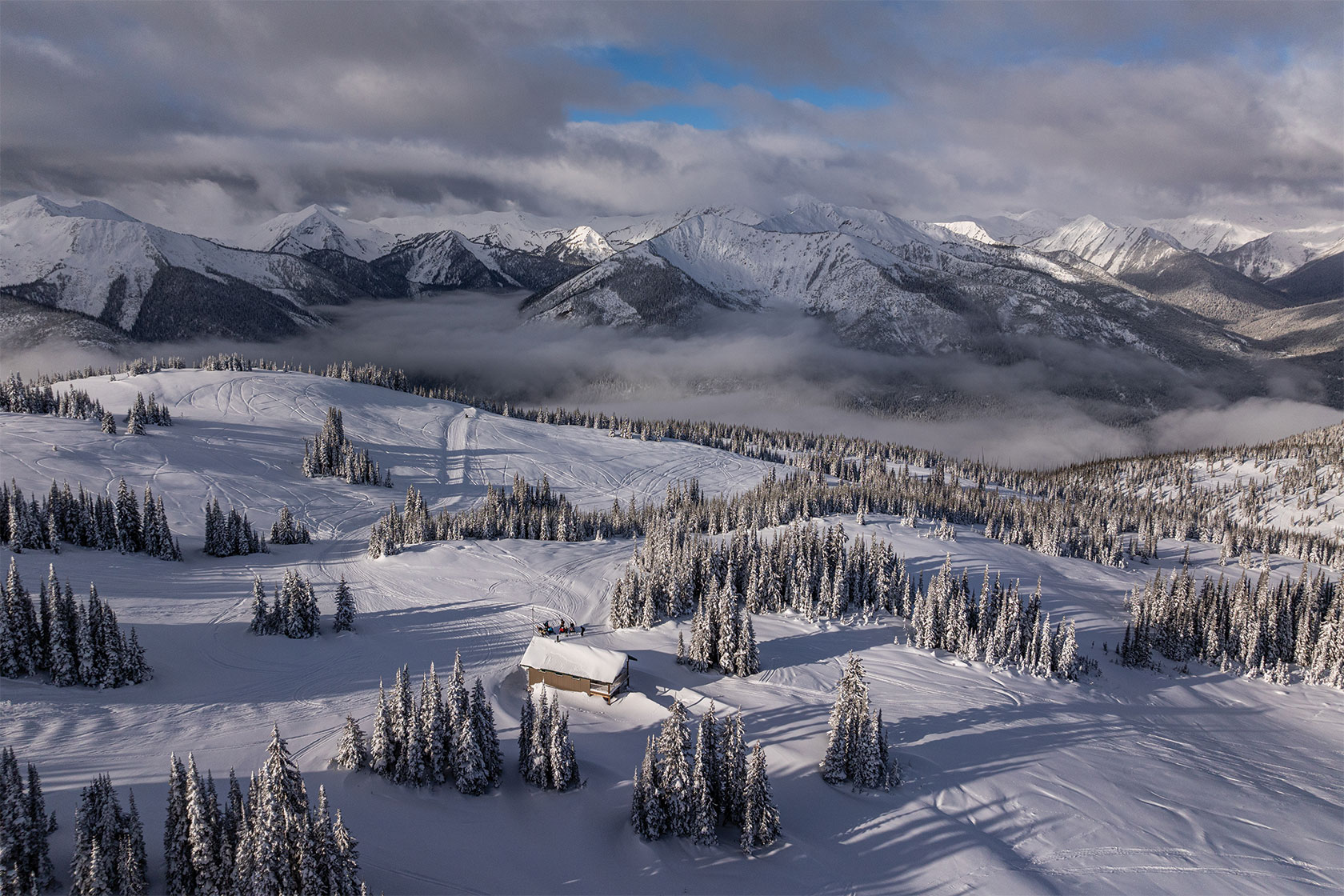
Backed by a shovel-grooved wall of snow, Curtis Pawliuk stands somewhere in Allan Creek, British Columbia’s famous alpine recreation area near Valemount, reading the snowpack into a phone camera for an audience of niche backcountry adventurists.
“There’s 140 to 170 centimeters of snow on the ground,” he says, “and the alpine is holding a persistent slab problem,” referring to a buried surface hoar layer 65 centimeters down that just days earlier, triggered remotely on a 40-degree slope some 200 meters away. In this social dispatch, he talks about an upcoming hard-freezing-level swing, riders wanting the groomers out and how he and his team are doing what they can. After signing off, Pawliuk gets back to work on tasks that the camera never sees.
It’s a small moment, but it’s one that captures his whole job at once. Pawliuk has spent the past 20 years as executive director of the Valemount Area Recreation Development Association (VARDA). On any given day that role might mean forecasting avalanche hazards for his own crews, chasing a sponsorship renewal or defending a budget line to a board of 12 to 14 volunteers. VARDA runs on roughly C$870,000 a year, a budget the organization has outgrown as its expenses and needs increase.
A club built from conflict
Despite its current role as a recreation authority, VARDA didn’t start as one. It began in the late 1990s as a snowmobile club, and incorporated into its current form in 2004 after years of friction with other backcountry users operating in the same mountains: heli- and cat-skiing outfits, non-motorized skiers and a public that didn’t always agree on who belonged where.
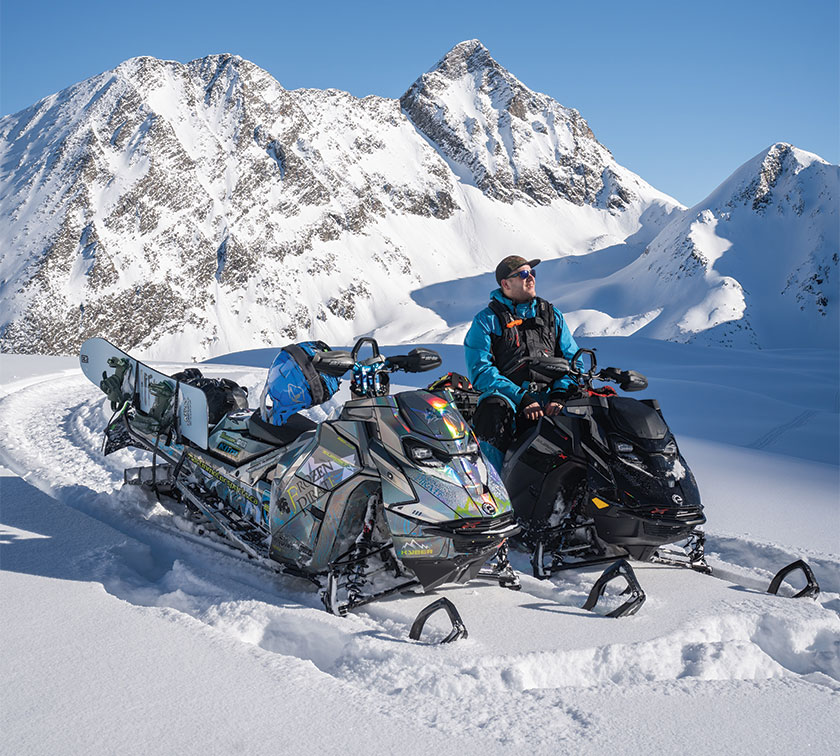
“We certainly had our conflicts,” Pawliuk said, though he quickly admits he wouldn’t use that word anymore. VARDA replaced the tension with a structure as tight as the snowpack he measures: a board that brings together local government, commercial operators, and motorized and non-motorized recreation groups, working out shared terrain rather than contesting it.
That history is significant because the organization it produced isn’t a snowmobile club anymore. It’s the entity that manages snowmobiling, sled-skiing and mountain biking access for an entire mountain town, one still small enough to count its year-round population in the hundreds, running a budget that would strain municipalities many times its size.
The real cost of a season
Here’s what that budget looks like. Day passes at C$30 bring in less than a third of VARDA’s revenue. Season passes and memberships bring in less again. Sponsorships account for about a quarter. The rest comes from grants: a Columbia Basin funding pool tied to the region’s hydroelectric reservoir system, Resort Municipality Initiative funding on a three-year cycle and a handful of northern programs VARDA has to continually reapply for.
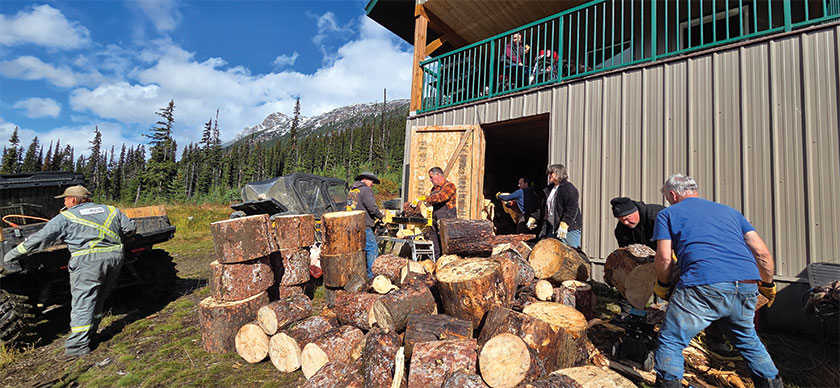
Pawliuk built the sponsorship side, one relationship at a time over the past two decades, from nothing to roughly C$150,000 a year. The money comes from snowmobile dealers, oilfield companies or people who just want to support what VARDA does, often from six hours away with no obvious stake in a town of 900. The most common tier is C$1,000: a small business owner who wants a little marketing and a way to support the club.
Most of VARDA’s sponsors have stuck around for 15 to 20 years, and Pawliuk now runs a fresh recruitment drive every August, aware of what happens the year loyalty runs out.
What the money can’t cover
There’s a deeper problem than just the fragility of incoming dollars: what each dollar is legally permitted to do. Day-pass revenue, under VARDA’s agreement with the province, has to go back into the specific zone where it was collected: staffing, equipment or a truck that needs new tires. Grants, meanwhile, reliably fund new infrastructure, like trails, cabins or bike parks, but almost never fund what keeps that infrastructure standing.
“Nothing will fund general operations,” Pawliuk said. The day pass is supposed to cover maintenance, but in reality, “it often falls very short of covering the bills.”
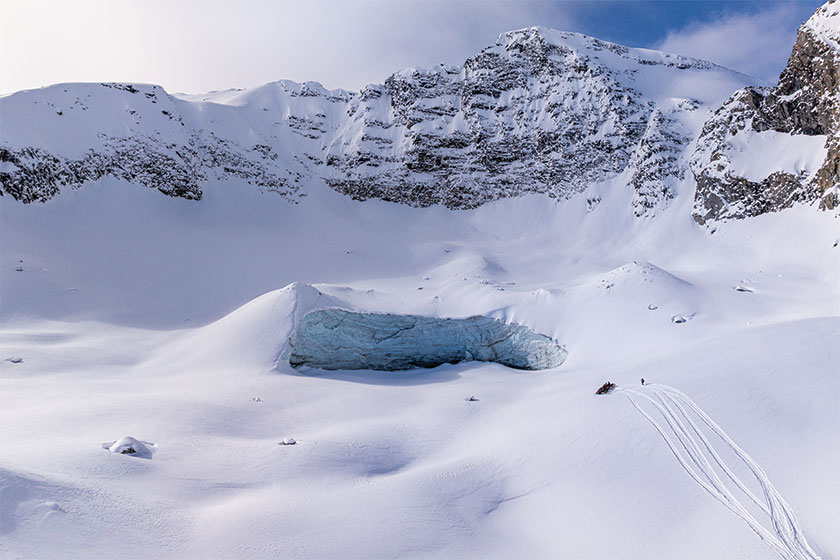
Plowing snow out of VARDA’s highway staging areas alone costs roughly C$20,000 a season. Grooming the snowmobile access trails, some stretching 30 kilometers before riders even reach open terrain, runs an additional C$150,000 to C$175,000. Layer in an avalanche safety program and general upkeep, and the math starts carrying its own persistent slab problem, especially as recreation-specific grant streams increasingly divert toward social priorities like housing.
The staffing side is lean by necessity: three or four winter trailhead attendants, a part-time bookkeeper, a three-person summer trail crew working four days a week and Pawliuk himself, effectively running a near-million-dollar operation without an assistant. “I would absolutely love to have an assistant manager,” he said. “There’s just simply no funding for it.”
Awareness over mandate
VARDA’s safety work follows the same pattern: real, but never quite funded as a line item in its own right. The organization was the first snowmobile club in the province to post regular social media safety and conditions updates, and among the first to install trailhead avalanche transceiver-checking stations. However, none of that constitutes a formal public safety mandate. As Pawliuk says, “it’s all in the realm of media or small events and awareness,” a culture he’s built into the organization’s daily habits, reinforced by his own decade-plus seat on the Avalanche Canada Board of Directors.
What Valemount can lose
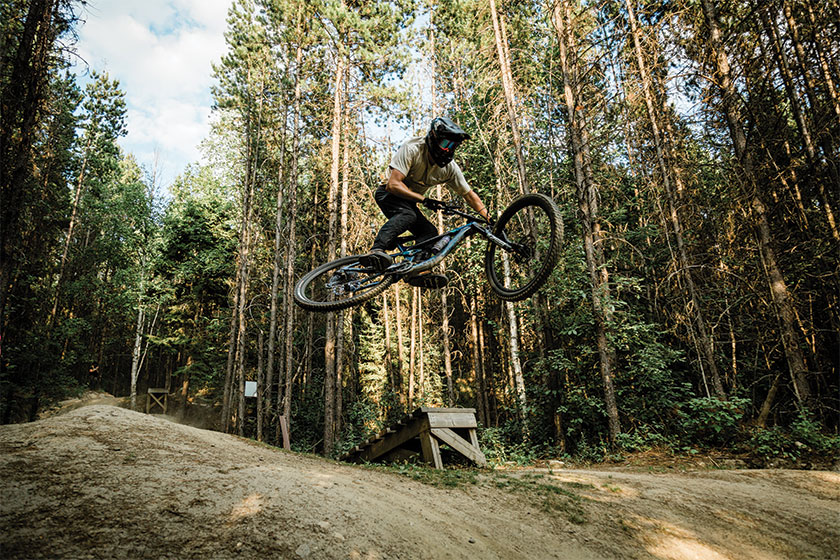
Ask Pawliuk what recreation access means for the local economy, and he doesn’t hedge. Before organized snowmobile management, he says, winter used to shut local businesses down almost entirely. Now, VARDA estimates that more than 20,000 visitors come to snowmobile each winter, and the mountain bike network the club has built over the past decade pulls roughly 80,000 passes a season across six trail counters. A recent 250-person event sold out in under a week.
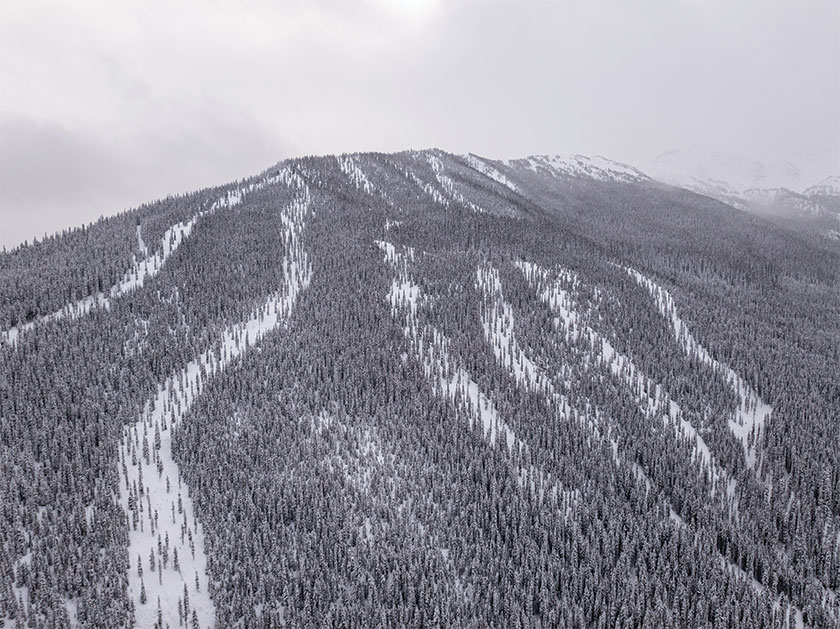
Valemount sits between Edmonton, Alta., and Vancouver, B.C., a highway waypoint that historically had little reason for through traffic to stop. With logging in decline across the region, recreation has become one of the few remaining growth industries, feeding everything from hospitality and gas stations to the trades. In a town this size, VARDA is less a contributor to the economy and more an economic engine.
Holding, for now
While none of this reads exactly as a crisis, there is a subtle air of precariousness. The system that works today is the result of Pawliuk holding things together for the last 20 years through relationships, timing, passion for the outdoors and a fair amount of determination, none of which are guaranteed to outlast him. He’s careful not to frame the fix as someone else’s problem, though. “We need sustainable funding,” he said, “but we need to create it from within our own community.” He’s not looking for a government solution but a local one, which remains unresolved.
For now, the patchwork holds. Whether it keeps holding is the open question that VARDA and towns like it across British Columbia’s backcountry will continue to answer, one season at a time.